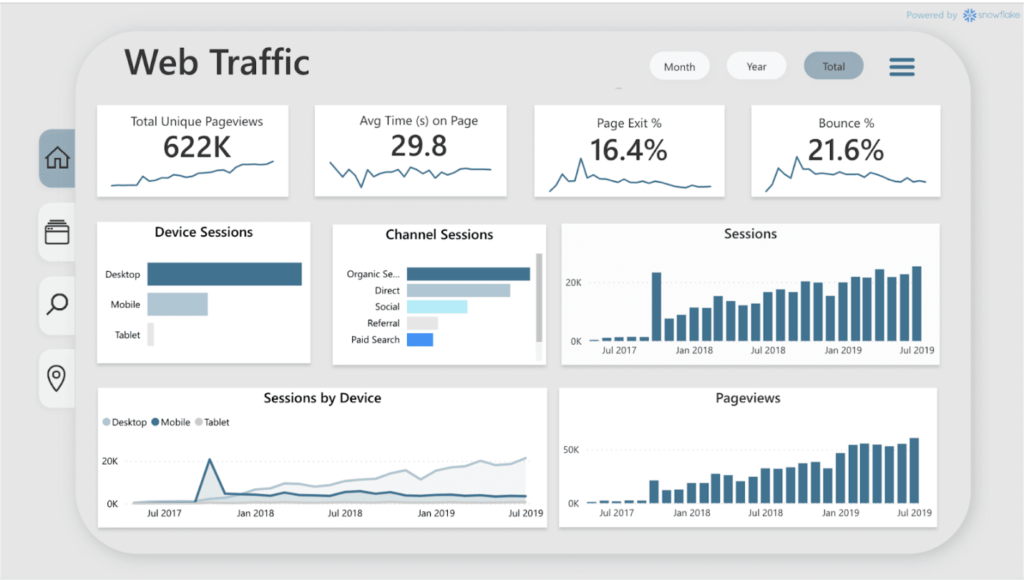
Data Platfrom Strategy Adoption
TL;DR: Spearheaded a comprehensive data platform onboarding, integrating Mixpanel, Power BI with Microsoft Fabric. This initiative streamlined analytics workflows and democratized access to critical business insights. Significantly improved decision-making across the organization, laying the groundwork for scalable data products and future growth with disparate data sources.
The Problem: Data Silos and Stalled Insights
Organizations thrive on timely, accurate, and accessible insights. However, in my previous role, we faced a common yet critical challenge: a fragmented data landscape.
Here’s what the “Before” picture looked like:
- Disparate Tools & Data Silos: Data resided in various systems (operational databases, legacy BI tools, ad-hoc spreadsheets), making a unified view impossible.
- Slow & Manual Reporting: Generating reports was a laborious, weeks-long process, often requiring specialized SQL expertise. Business teams waited endlessly for answers.
- Lack of Self-Service Analytics: Most teams couldn’t independently explore data, leading to a bottleneck at the analytics team.
- Inconsistent Metrics: Without a single source of truth, different reports often showed conflicting numbers, eroding trust in the data.
- Limited Scalability: Our existing infrastructure couldn’t support the growing volume of data or the increasing demand for advanced analytics.
The Vision: A Unified, Scalable, and Insight-Driven Data Platform
My objective was clear: Data-as-a-Product. Architect and implement a modern data platform. The goal was to transform our data from a liability into a strategic asset.
- Unified Data Lakehouse: Centralize all data, structured and unstructured.
- Best-in-Class Analytics Tools: Provide specialized tools for different needs (product analytics, business intelligence).
- Self-Service Empowerment: Enable business users to find their own answers.
- Scalability & Performance: Future-proof the infrastructure for growth.
- Data Governance: Ensure data quality, security, and compliance.
- ML capabilities: By centralizing clean, structured data enabled churn prediction, user segmentation, and anomaly detection.
The Solution: Strategic Integration with Mixpanel, Power BI with Microsoft Fabric
After thorough research, vendor evaluations, and stakeholder alignment, I spearheaded the strategic onboarding and integration of a powerful suite of tools:
- Mixpanel (Product Analytics): For deep, real-time understanding of user behavior within our digital products.
- Power BI (Business Intelligence & Reporting): For interactive dashboards, reporting, and broad business insights across sales, marketing, and operations.
- Microsoft Fabric (Data Lakehouse & Enterprise Data Platform): As the foundational backbone, providing a unified platform for data ingestion, storage, processing, and orchestration.
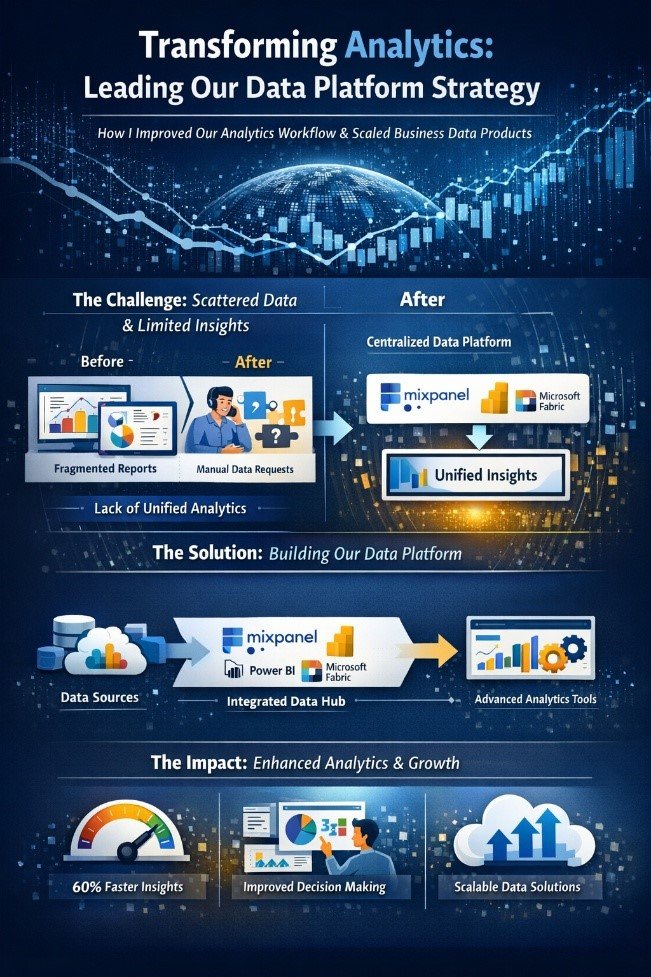
Results & Impact
- Significant increase in dashboard adoption
- Faster insights for product and leadership teams
- Analytics workflows scaled without proportional headcount growth
- Not just dashboard but Intelligent decisions support engines
I noticed teams stopped debating numbers and started debating decisions.
Lessons Learned
This initiative showed that a successful data platform is less about tools and more about adoption and trust. Centralizing data and standardizing metrics reduced friction, but the real impact came from enabling teams to confidently use data in their daily decisions.
It also reinforced that modern platforms should go beyond dashboards. By embedding capabilities like prediction, segmentation, and anomaly detection, the platform began shifting from reporting what happened to guiding what to do next.
In the end, the value wasn’t just better visibility—it was better, faster decisions.
Great data platforms don’t just show information — they change how organizations think and act.